| Quantity: | |
|---|---|


W7023
Zenewood
| Item No. | W7023 |
| Material | Galvanized steel |
| Dimension | 210*80*300MM |
| Finishing | Powder coating |
| Fixing | Screws |
| Feature | Wall mounted design + for many keys |
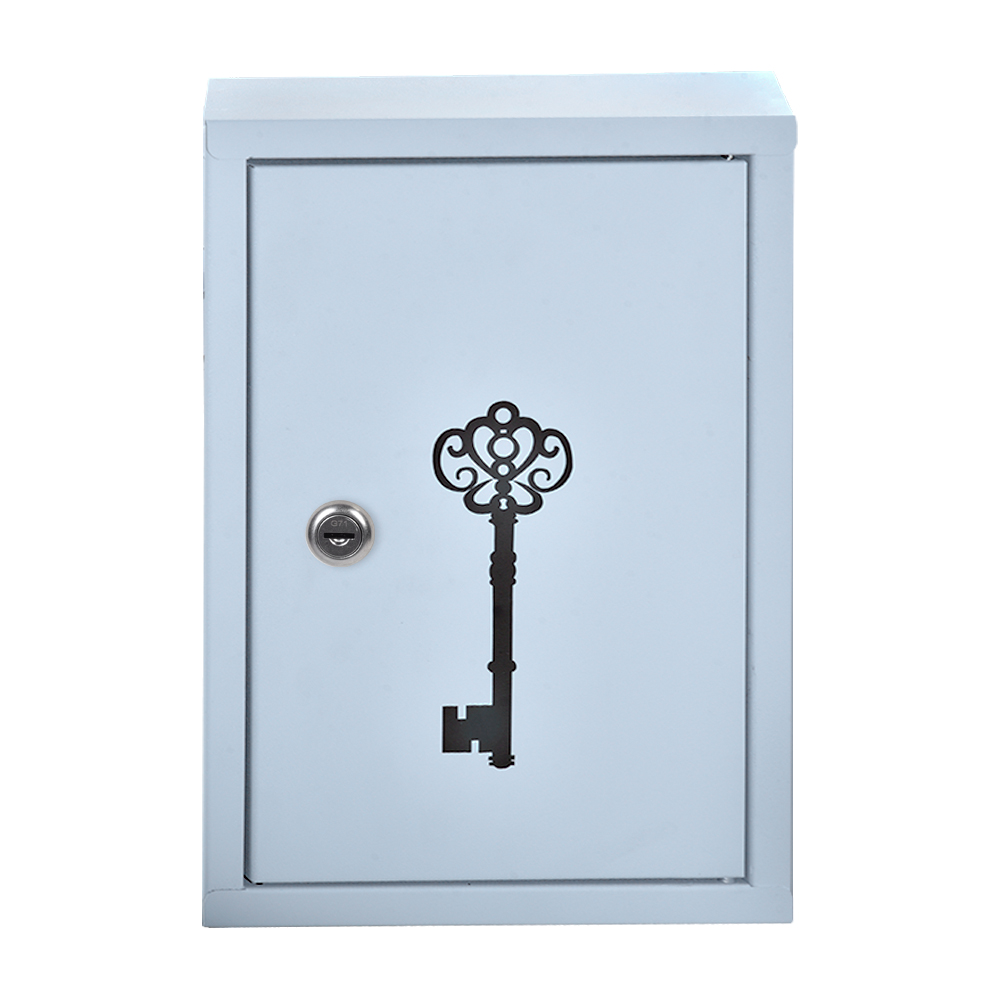
This key safe box is a wall-mounted steel cabinet for keeping household, rental and shared keys in one place. The body is galvanized steel under a powder-coated finish, closed by a single hinged front door with a combination code lock. The model reference is W7023.
Inside, the keys hang on a set of hooks instead of piling up in a drawer: everyday door and car keys, the spare set that never gets put back, and the small bunch that a managed property needs to keep together. Because the door opens on a code rather than a key, nobody has to carry a cabinet key around or wonder where it was last left. Mount it in the entry, on a hallway wall, in a utility cupboard or on a garage wall beside the internal door, set a combination the household will remember, and the keys stay together and out of sight.
It is bought by importers and distributors extending a home hardware range, by e-commerce sellers assembling a key storage line, by renovation contractors, and by the landlords, letting agents and property managers who need a wall mounted secure key safe box for property management and a tidy handover routine. Production is made to order, so finish, door detail and packing can be agreed for your market before the order goes into the factory.
· Coded access — a combination code lock replaces the cabinet key, so there is nothing extra to carry, copy or lose at the door.
· Interior hooks for many keys — the inside is fitted with hook racks, so individual keys and bunches hang separately and stay easy to find.
· Galvanized steel body — a metal cabinet rather than a plastic one, so the keys sit in a solid box that does not flex or rattle when the door closes.
· Wall-mounted design — the flat back panel sits against the wall and keeps keys off counters and out of drawers.
· Compact cabinet proportions — a slim, tall box that fits an entry wall or utility cupboard where a wide key board would not.
· Single hinged front door — the whole cabinet opens in one movement, so every hook is reachable at once.
· Key emblem on the door — a simple graphic on the face makes the cabinet easy to spot at the end of a corridor or inside a cupboard.
Galvanized steel is the reason this cabinet holds up on a wall. The steel is zinc-coated during galvanizing, so the surface resists the corrosion that plain sheet metal picks up in damp indoor air, and the powder coating is applied over it as a finish that does not flake away the first time a key ring knocks the door.
The cabinet is built as a folded steel box with a flat back panel that sits flush against the wall. The door is a single panel on a full-length hinge, with the lock set into the face and the combination mechanism behind it; the lock face is a bright, hard-wearing fitting against the matte body. Photographs show a matte powder-coated cabinet with a dark key graphic on the door — the graphic and the lock are the two details that identify it as a key store at a glance. Inside, the hook racks sit against the back panel so keys hang clear of the closing edge.
The coated surface is the part you touch most, and it is easy to live with. A soft cloth with a mild soap solution takes off fingerprints, dust and the marks left by hands that have just come in from the garden. Skip abrasive pads and solvent cleaners, keep a soaking wet cloth away from the lock, and dry the cabinet after cleaning. Like any steel product, a wall mounted secure key safe box for property management lasts longer where air can move around it — a hallway wall treats it better than a closed cupboard that stays damp for weeks.
Material | Galvanized steel |
Finish | Powder coating |
Dimension | 210 × 80 × 300 mm |
Mounting | Wall mounted |
Fixing | Screws |
Door | Single hinged front door |
Access | Combination code lock |
Interior | Hook racks for many keys |
Model | W7023 |
Brand | Zenewood |
Manufacturer | Jiangmen Zenewood Limited |
Typical use | Residential and apartment key storage |
· Overall size — 210 mm wide, 80 mm deep and 300 mm tall, so the cabinet reads as a slim, tall box rather than a wide key board.
· Projection from the wall — the 80 mm depth is what the closed cabinet stands proud of the surface; leave that much clearance behind doors, shelving and cupboard frames.
· Door clearance — keep the opening side of the hinged door clear so it can swing fully; a tight corner or a door rebate will stop it before you can reach the far hooks.
· Mounting height — set the cabinet so the lock face sits at a comfortable reading and reaching height; shoulder level works well in most hallways.
· Recommended positions — an entry or hallway wall away from a doorway swing, inside a utility or boot cupboard, on a garage wall beside the internal door, or on a home office wall clear of a radiator.
· Wall type — the cabinet fixes securely to a solid wall; on plasterboard or drywall, plan for a stud or fixings rated for the load before you drill.
· Sight lines — avoid a spot where the lock face is overlooked from the street, a shared landing or a corridor with regular foot traffic.
1. Choose the position and check the wall for hidden cables, pipes or studs before any drilling.
2. Hold the cabinet against the wall at the chosen height and mark the fixing holes through the back panel.
3. Drill pilot holes sized for the fixing and the wall type; if the wall is masonry, concrete or metal stud, ask us which fixing suits it before you drill.
4. Fix the cabinet to the wall and check that it sits level, flush and firm against the surface.
5. Open and close the door a few times to confirm it swings freely and the lock lines up without pressure.
6. Set the combination, then test it once with the door open before any keys go in.
7. Load the hooks so heavier bunches sit low, and check the door still closes without pressing on the keys.
8. Hand the code to the people who need access, and record the cabinet's position in your key register.
· Family entryways — one coded place for everyday keys, spare sets and the gate, shed and bike-lock keys that otherwise spread across the house.
· Rental and managed properties — where a coded cabinet is what you need, the code replaces the handover key ring, so the incoming tenant or cleaning team opens the cabinet without you being on site.
· Apartments and multi-unit buildings — the slim cabinet fits an entrance wall or utility cupboard, with room for a household set plus a neighbour's spare.
· Holiday lets and short-stay rentals — the combination can be reviewed between guests; confirm the re-set procedure for your unit with us before the first check-in.
· Second homes and annexes — a single coded cupboard for the housekeeper, gardener or family member who looks in on the property.
· Home workshops and studios — a wall spot for the keys to cabinets, storage boxes and garden equipment, kept away from the workbench.
· Handover periods — during a renovation or a new-build handover, the site keys stay in one coded place and the cabinet is emptied at completion.
The combination is what changes the routine around this cabinet. Nobody has to carry a cabinet key, which means there is no second key to cut when a family member moves in, and no lock to replace when a copy goes missing. Set the code to something the people who use it will remember, and keep it away from the obvious — a door number or a street address is the first thing a stranger would try.
In a rental or managed property, the same routine works at every changeover: the code goes to the incoming tenant, the cleaner or the contractor, and it is reviewed as soon as they hand the keys back. A single household or a small team shares one code comfortably; a building with rotating staff is usually better served by a multi-hook organizer or a wider key storage format from the range.
Ask us to walk you through the re-set procedure for your unit before installation, so whoever manages the keys can change the combination without guessing. Keep a record of the current code somewhere secure outside the cabinet, and never write it on the inside of the door. If the lock feels stiff or the code will not engage cleanly, stop and contact us — the door should close and lock with light pressure, and forcing it is the one thing that turns a small adjustment into a repair.
· Made to order — production starts once the order is confirmed, so confirm the current lead time with your sales contact before you set your own delivery dates.
· Quantity — minimum quantities vary by product line; tell us the volume you have in mind for the first order and we will confirm the terms that apply.
· Quotation — pricing is quoted per order rather than published, so ask for a quotation with your quantity and destination and keep it for your own margin planning.
· Built to your order — as a key lock box supplier we produce to the specification agreed with you, so finish, artwork and packing are fixed before production starts.
· Samples — ask your sales contact about sample availability before you commit to a production run.
· Branding and door detail — tell us if the door needs your own artwork or a different finish for your market, and we will confirm what the tooling and the finishing process allow.
· Packing and marking — confirm the carton marking, pallet configuration and any channel labelling your market needs when the order is placed.
· Shipping terms — payment terms, delivery term and destination port are agreed on the quotation.
· Phased projects — if the order ships in stages, tell us the split at the planning stage so production and packing can be scheduled to match.
Key storage is one part of a wider sheet metal range, and most buyers who take this cabinet fill the rest of the entry from the same place. A wall-mounted mailbox, a parcel drop box for porch deliveries and a set of house numerals all sit in the same catalogue, and the workshop side of the range covers tool cabinets and workbenches for buyers who also supply garages and workshops.
Working with one key lock box supplier for the whole entry is mostly about paperwork and consistency: one production schedule, one shipment, one set of export documents, and finishes that can be agreed together so the mailbox, numerals and key cabinet do not clash on the same elevation. If your customers buy key storage in more than one format, the range also covers keyed boxes, compact coded cabinets, multi-hook organizers and outdoor key safes — tell us which formats your market asks for and we will help you pick the ones that fit rather than carrying a long list.
For project buyers the practical advantage is one point of contact. A renovation or property programme that needs entry mailboxes, key control and workshop storage can be quoted as a single order instead of three.
· Sheltered positions are what this model is built for — a hallway or entry wall, a utility or boot cupboard, a garage wall beside the internal door, or a home office wall. In those spots the door face never takes rain, and the galvanized steel under its powder coating handles damp indoor air, fingerprints and daily handling without complaint.
· What sheltered actually means — an eaves overhang, a recessed porch or a covered walkway all count, provided the wind-driven rain of your heaviest storm does not reach the lock face. Look at the wall during the first serious rain of the season: a water stain or a soft line on the render marks how far the weather gets.
· Positions to avoid — an exposed gate post, a fence panel, a wall under a shallow open porch, the spot beneath a downpipe or a sprinkler head, and any wall where water stands at the base. Metal copes with weather far better than plastic, but the combination lock and the hinge are mechanisms, and a mechanism that sits wet will stiffen and mark.
· What exposure does over time — water works into the code wheels and along the door edge, the code starts to feel gritty or stiff, rust blooms at the hinge and the bottom edge of the door, and keys stored inside come out damp.
· If your position is exposed, order the outdoor model — the range includes an outdoor wall mounted key safe box for property management and real estate agent use, made for mounting on an exposed wall. As a key lock box supplier we produce both versions, so tell us the wall type and how much weather it takes before you order and we will confirm which one your site needs, rather than sending the indoor cabinet to a spot that will spoil it.
· Coastal and high-humidity sites — salt-laden air and year-round damp are harder on steel than rain, even under cover. Wipe the cabinet and the lock face more often, keep the door closed through wet weather, and check the hinge for a white or brown film at the start of each season.
· Confirm the position with us before ordering — send a photo of the wall, the depth of any overhang, the prevailing wind direction and the distance from the sea, and we will confirm the version that suits your customers. It is the single detail that decides whether this cabinet is the right buy for a given site.
Zenewood is a sheet metal products manufacturer based in Jiangmen, China, producing since 2004. Around 200 people cover R&D, design, production and OEM/ODM work, and our integrated manufacturing keeps lead times stable and capacity scalable as your programme grows. Buyers in North America, Australia, Japan, Europe and Southeast Asia come to us for made-to-order projects, so sizes, finishes, branding and packing can be adapted to your market — with quality checked through the batch. Tell us your requirement and our team will quote it.
How many keys will this key safe box hold?
The interior hook racks are built for a full household set rather than a couple of spares — everyday door and car keys, spare sets for family members, and the small bunch of shared keys a managed property needs. How many fit depends on the bulk of the keys: long or thick keys take more of the rack than flat ones. Tell us roughly how many keys you need to store and we will check the hook layout against it.
Does the cabinet need a key to open?
No. The door carries a combination code lock, so there is no cabinet key to carry, copy or lose. That is the main reason this model suits a household where several people need the same keys, and a rental where the people who need access change over time. If you would rather have keyed access, we make keyed key boxes in the same wall-mounted format — tell us which version your market asks for.
Can it be mounted outside?
This cabinet is made for residential key storage indoors and in sheltered spots — a hallway, an entry, a utility cupboard or a garage wall. Galvanized steel with a powder coating handles normal handling and damp indoor air well, but if the mounting position takes direct rain, tell us before you order and we will point you to the model from our key storage range that suits an exposed wall.
How is the cabinet fixed to the wall?
It is fixed with screws through the back panel, which sits flat against the wall. On a solid masonry wall that is usually a straightforward job; on plasterboard or drywall you need a stud or fixings rated for the load. Tell us what the wall is made of and we will confirm the screw and plug combination that suits it.
Can the combination be changed when a tenant or a cleaner moves on?
The combination is the only key this cabinet has, so being able to re-set it matters. Ask us to walk you through the re-set procedure for your unit before installation, and keep the new code somewhere secure outside the cabinet — never on the inside of the door. Pick a combination that is not the door number or the street address.
Is this a good choice for a rental flat or a managed property?
Yes. This is a wall mounted secure key safe box for property management use as much as a household cabinet. A landlord, letting agent or building manager gets one coded point for the keys that tenants, cleaners and contractors need, and the code is reviewed at each changeover instead of the lock being replaced or keys being passed hand to hand. The cabinet is small enough for an apartment entrance or utility cupboard, and the coated steel body wipes clean between lets.
Can we have our own artwork or a different finish on the door?
The cabinet is produced to order, so door artwork, finish and packing can be adapted for a distribution or own-brand programme. Send us what you have in mind and we will confirm what the tooling and the finishing process allow before production starts, so the first batch matches the sample you approve.