
Views: 0 Author: Site Editor Publish Time: 2025-12-19 Origin: Site


First impressions happen in an instant. When guests, delivery drivers, or potential buyers pull up to your curb, the first thing they look for isn't the landscaping or the color of your front door. They are looking for confirmation that they have arrived at the right place. They are looking for your house number.
Often overlooked in the grand scheme of home renovation, number signs are a critical component of your home's exterior hardware. They serve a dual purpose that is rarely found in other architectural elements: they are a vital safety feature and a significant aesthetic statement. A faded, crooked, or missing number sign is not just a nuisance; it sends a message of neglect. Conversely, a crisp, well-crafted metal sign suggests a homeowner who cares about details.
Since 2004, Zenewood has understood that hardware is the jewelry of the home. As trailblazers in the international metal hardware sector, we know that the smallest details often speak the loudest. Whether you are updating a mid-century modern bungalow or finishing a contemporary build, choosing the right number signs requires more thought than simply picking up sticker decals at the hardware store.
Before discussing aesthetics, we must address the primary function of number signs: identification. In an emergency, seconds matter. Firefighters, paramedics, and police officers rely heavily on visible address numbers to locate a property quickly. If your signage is obscured by branches, painted over, or simply too small to read from the road, it can delay response times significantly.
Beyond emergencies, the rise of e-commerce has made visible signage a daily necessity. Delivery drivers are often on strict time schedules. If they cannot verify your address from the driver’s seat, you risk missed packages or deliveries left at the wrong doorstep. Clear, legible number signs act as a beacon, ensuring the smooth operation of modern life's logistics.
When selecting outdoor hardware, durability is non-negotiable. Your number signs are exposed to the elements 24 hours a day, 365 days a year. They must withstand scorching sun, freezing rain, and coastal salt spray without degrading.
While acrylic and wood are common options, they often succumb to the environment. Wood can rot, warp, or crack if not sealed annually. Plastic and acrylic often become brittle and fade under UV exposure.
For a lasting investment, metal remains the superior choice. This aligns with Zenewood’s commitment to craftsmanship and innovation. High-quality metals like stainless steel, solid brass, and zinc alloys offer longevity that other materials cannot match. They provide a weight and texture that communicates quality.
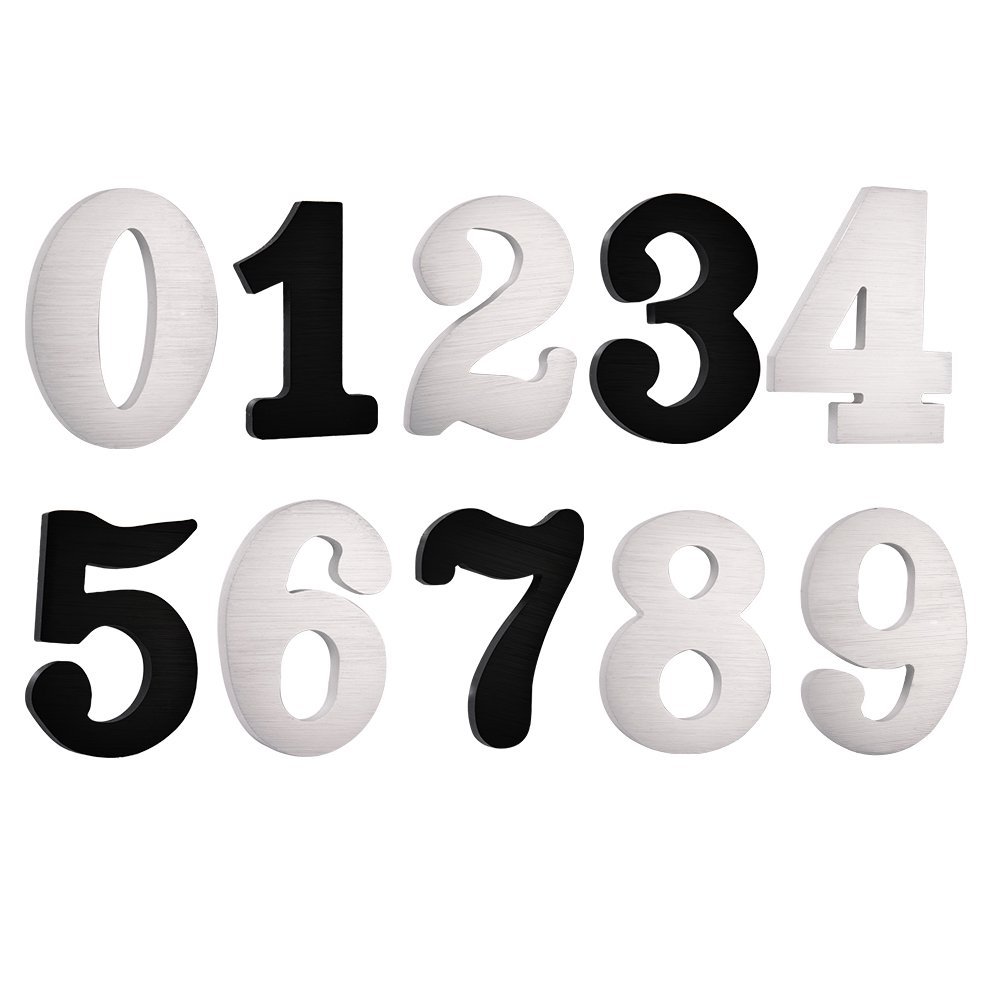
To help you decide which material suits your climate and style, review the comparison below:
Material |
Durability |
Aesthetic Appeal |
Maintenance Required |
Best For |
Stainless Steel |
Very High |
Modern, sleek, industrial |
Low (occasional wipe down) |
Contemporary homes, coastal areas |
Solid Brass |
High |
Traditional, warm, classic |
Medium (polishing needed to prevent patina) |
Colonial, Victorian, or luxe styles |
Zinc Alloy |
High |
Versatile, textured, sturdy |
Low |
Transitional or rustic styles |
Wood |
Low-Medium |
Natural, organic, rustic |
High (regular sealing/staining) |
Cabin or farmhouse styles |
Acrylic/Plastic |
Low |
Cheap, flat, varied colors |
Low |
Temporary signage or budget projects |
Once you have committed to a durable material, the next step is selecting a typeface that complements your home’s architecture. The font of your number signs should not clash with the era of your house.
For contemporary homes, Bauhaus or sans-serif fonts are the standard. These numbers feature clean lines and lack decorative "feet" at the ends of the strokes. They are easy to read from a distance and convey a sense of order and simplicity. Stainless steel numbers in a "floating" mount—where the number sits an inch off the wall—create a shadow effect that adds depth and modern flair.
If your home is a Victorian, Georgian, or Colonial style, ultra-modern fonts may look out of place. Serif fonts (like Times New Roman or Garamond styles) are more appropriate. These numbers feel established and elegant. A black or oil-rubbed bronze finish often looks stunning against white siding or red brick.
Homes built in the 1920s through the 1960s often benefit from stylized fonts. Art Deco numbers feature geometric flair, while Mid-Century Modern scripts are distinctive and playful. Zenewood’s innovative approach to hardware design ensures that even these stylized options retain the structural integrity required for outdoor use.
You have the perfect metal numbers, but where should they go? Poor placement can render even the most expensive signs useless.
Height and Lighting:
Ideally, number signs should be placed near the front door or on a mailbox post near the street. They should be installed at eye level or slightly above. Lighting is equally crucial. If you live on a dark street, installing your numbers directly under a porch light or using backlit LED numbers ensures they are visible at night.
Contrast is Key:
Visually, contrast is what makes text readable. If your house is painted a dark charcoal, black numbers will disappear. You need brushed nickel, white, or polished brass to pop against the dark background. Conversely, if your home is white stucco, dark matte black or bronze numbers provide the necessary visual anchor.
Mounting Styles:
· Flush Mount: The numbers are screwed tight against the surface. This is traditional and sturdy.
· Floating Mount: Spacers are used behind the number to push it off the wall. This is a favorite in modern design because the shadows change throughout the day, creating a dynamic look.
· Plaque Mount: The numbers are pre-attached to a metal, stone, or wood plaque, which is then mounted to the wall. This is excellent for rough surfaces like stone or stucco where mounting individual numbers is difficult.
While metal is durable, a little care goes a long way in maintaining that "new" look. Since Zenewood has been refining hardware excellence for two decades, we recommend a simple maintenance routine.
For stainless steel and zinc, a simple wipe down with mild soap and warm water once a season removes dirt and pollutants that can cause pitting over time. If you have chosen unlacquered brass, be aware that it is a "living finish." It will darken and patina over time. Some homeowners love this antique look; others prefer to polish it annually to keep it shining. Knowing what you want from your hardware before you buy will save you frustration down the road.
Your home's exterior is a reflection of what lies within. While a number sign is a small piece of hardware compared to a roof or a driveway, it is the focal point of your entryway. It is the handshake of your home.
By choosing high-quality materials and thoughtful design, you ensure that your home is safe, findable, and beautiful. Zenewood remains dedicated to providing the craftsmanship necessary to make that distinction. Investing in quality number signs is an investment in your home’s identity.
For visibility from the street, a minimum height of 4 inches is recommended. If your house sits more than 100 feet back from the road, consider scaling up to 6 or 8 inches to ensure legibility for emergency services and drivers.
Yes, but it requires the right tools. You will need a masonry drill bit and plastic anchors. Most high-quality hardware sets come with mounting templates to help you mark the drill holes accurately on uneven surfaces.
House numbers are individual digits mounted directly to the wall. An address plaque is a single board (metal, stone, or wood) that displays the full number sequence. Plaques are often easier to install on difficult surfaces like uneven river rock.
While they won't add thousands to your appraisal, "curb appeal" significantly impacts how fast a home sells. Clear, stylish signage makes a home look well-maintained and inviting, which psychologically primes buyers to view the rest of the property favorably.


